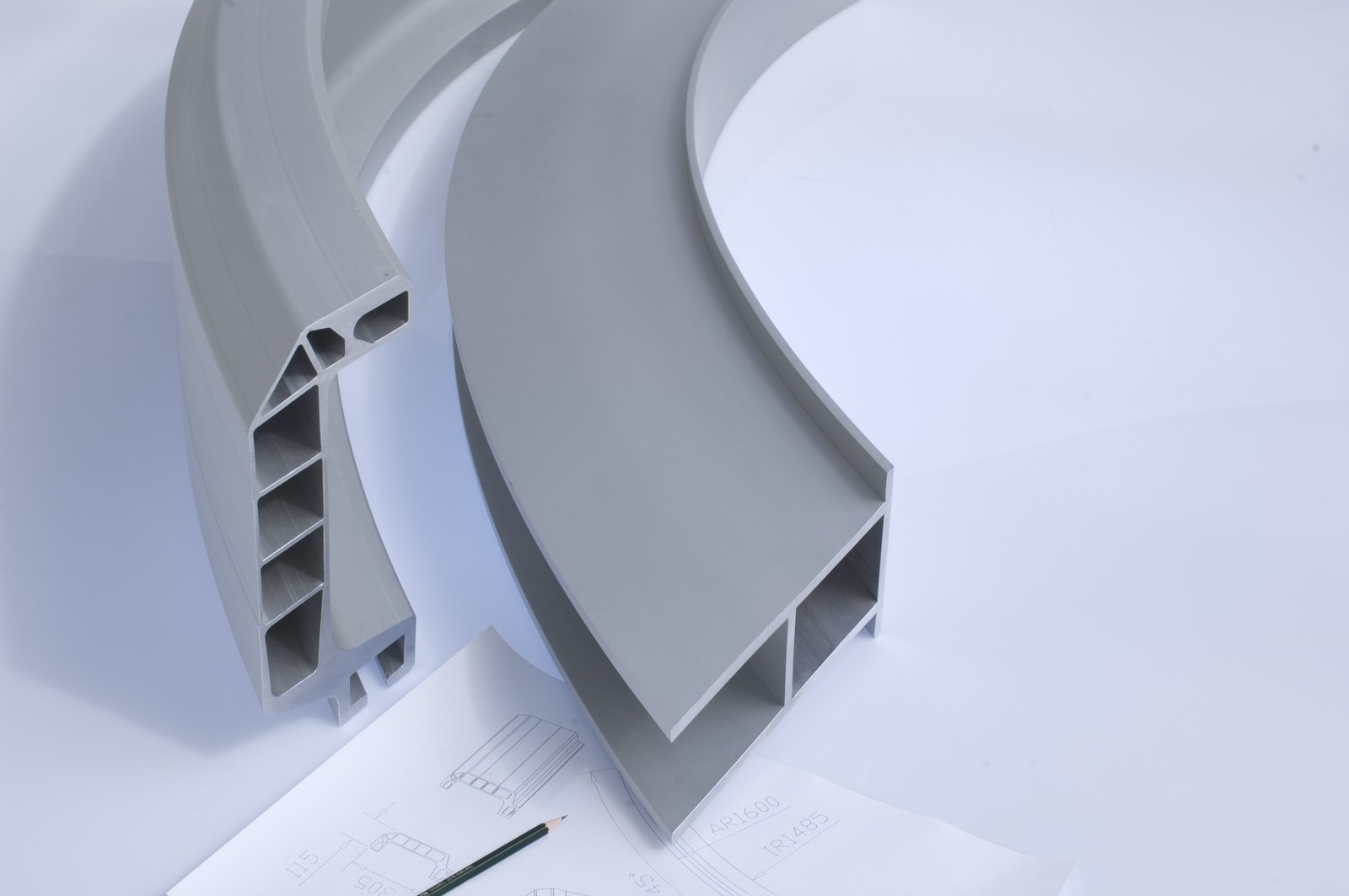
What sets the minimum radius
When a profile bends, the outer wall stretches and the inner wall is compressed. The tighter the radius, the greater that difference. At some point the outer wall becomes too thin, or the inner wall starts to wrinkle. Where that point lies depends on four things: the alloy, its temper, the shape of the cross section and the wall thickness. A solid bar can be bent tighter than a thin-walled hollow profile of the same size.
Which technique reaches the tightest radius
Mandrel bending supports the profile from the inside, so hollow profiles keep their shape in a tight bend. Stretch bending pulls the profile while it is bent, which gives very accurate curves with a clean surface. Roll bending shapes the profile gradually between rolls and suits large radii and long lengths. We choose the technique per profile.
Keeping the functions of the profile intact
Many aluminium profiles have built-in functions such as click connections, screw channels or cooling fins. Bending can deform them. We plan the bend so that these functions stay intact, and where needed we support the profile during bending or machine it afterwards.
What to send us
Give us the alloy and temper, the profile drawing with wall thicknesses, the required radius or radii, the arc length and the tolerances. Mention any surface requirements and functions that must stay intact. With that, our engineers can tell you whether the radius is within our standard and what else is possible.